
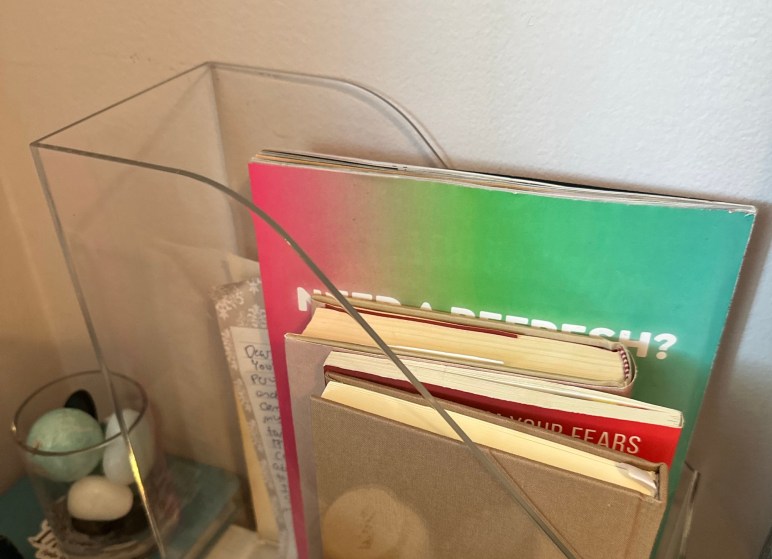
The queens of “self-help” sell arrival stories that keep imploding. I’m trying to remain aware that life is a continual journey
Glennon Doyle, Shauna Niequist, Liz Gilbert, and Jen Hatmaker all had pretty substantial life breakdowns at the same time, with four corresponding books. The timing of the four stories, and their eerie similarities, makes me wonder if that’s actually a coincidence of life stages, or a somewhat designed marketing trend- or both.
A life almost never fits the mechanisms of a book, but these five women keep trying to map a clear plot arc onto ever-evolving lives. They write books stating they have “arrived” at “The Truth”, but their next book describing their next life drama has a new “Truth”. A season of confusion might not end when the manuscript is due, so why do most of them pretend to have answers that keep changing?
As readers, we only get public views of these women at certain stages, not a comprehensive picture. Because of that, how many of their lives actually fit the narrative arc of each new memoir cycle, and how much is embellished?
The constant reinvention of self is natural to a point, but the polarity between these women’s own stories of themselves can sometimes cause whiplash. They seem to build brands on constant dissatisfaction with life, always looking for a new label .Three of these five women built platforms on being “Christian authors”, but seem to be unable to practice the basic Christian teaching of contentment in all things. I have a hard time discerning which reinventions follow the natural seasons of life and which ones are more marketing-based.
Jen Hatmaker – Of Mess and Moxie/Awake
Jen released Of Mess and Moxie in 2017, and her newest book, Awake, in 2025. OMAM is lighthearted, exploring the deep joys and shallow grievances of faith, family, and Southern living. I still like reading it (or playing the audiobook) when I want a fun, mindless comedy on in the background. Awake is a very different tale, outlining her divorce and rebuilding season. I have more empathy for Jen because she didn’t choose to implode her life out of boredom; she was more a victim of someone else’s choice. I think Jen was at least the most honest and dignified in handling her implosion, and the most honest about her own flaws.
Elizabeth Gilbert – Eat Pray Love/All the Way to the River
This one is definitely the most wild transformation with the least growth on the list. Eat Pray Love came out in 2006, and I’ve been using the audiobook to fall asleep on rough nights since about 2016. Is it a compliment or insult to Liz that her narration puts me to sleep without fail? That’s beside the point. The point is that “an Eat Pray Love journey” has now become a regular part of my vocabulary, and likely the vocabularies of millions of American women. The epic memoir of her year of solo international travel ended with her on a boat in Bali with the man she later married and stayed with for a decade.
I highly agree with this nuanced take on Gilbert’s latest foray into “love, loss, and liberation”. As Sema Karaman writes, “Each new book promises a final revelation about life and the self, yet the universal truth they boldly advocate for looks frantically different every time.” I know we all have recurring themes and issues in our lives, but if we’re never able to change our perspective or our reactions, we don’t develop as humans. Ironic for a “self-development memoirist” to be stuck in a loop of arrested development.
Glennon Doyle – Love Warrior/Untamed
Oh man, the irony writes itself here. For context, Glennon Doyle (formerly Melton) wrote Love Warrior about saving her marriage to a man, and then fell in love with a woman while touring said book. And then she wrote Untamed about marrying soccer star Abby Wambach.
I read Untamed without reading Love Warrior – why read the setup when the plot twist is already visible? Untamed is written in the same style as the other books – a collection of short vignettes. But where other writers clearly show the connective tissue between their essays, Glennon’s make less connective sense as a whole picture to me.
Glennon and Elizabeth have almost the same life and career trajectory – addiction, a first journey of self-exploration, bestselling books, a second life implosion, and leaving a husband for a woman. Glennon had a few extra public addictions, but like Liz, Glennon carries a perpetual nasal victimhood.
Shauna Niequist – Cold Tangerines & Present Over Perfect/I Guess I Haven’t Learned That Yet
Shauna published Cold Tangerines, a book about celebrating the beauty of everyday life, in 2007. Present Over Perfect in 2016 (with a foreword by Brené Brown) describes her first midlife crisis, releasing her patterns of overdoing, and her journey of softening and truly connecting with God. I read Present Over Perfect right around the time it was released, and it deeply resonated with me – even though I was 17 at the time and Shauna was around 40,
The thing that bugs me about Shauna’s latest release is that she never names the implosion. Outside research details her pastor father’s church scandal, but people like me who only read her books would still close the last page confused. I certainly did. The book described a handful of changes happening at once – moving, COVID, Shauna alluded to some health issues – but the story felt like it was being told through a filter, from a removed distance.
Brené Brown – The Gifts of Imperfection/The Podcast
I see Brené Brown as an antidote to the drama and constant chaos of the other four, and she later echoed this sentiment herself. The Gifts of Imperfection seemed like the description of her midlife rupture, but she kept her family together. I don’t agree with everything she says, but she seems more stable to me than someone constantly changing “her truth.” This might have something to do with her background in academia, rather than women’s writing.
Brené has largely stayed out of mainstream headlines in recent years, and she explained why on a 2025 podcast interview with the New York Times. When asked about her thoughts on the evolution of the online self-help space she pioneered, she said that the “well-meaning, well-intentioned, well-trained people in that space… make up about 30% of that space. I think there are 30% of the people who want to be in that space… who are under-qualified, thoughtful, sometimes helpful, often benign. And I think there are 40% sheer grifters.” This is the quote that went viral from the interview, and Brené didn’t even want to broach the subject. 30 minutes in, Brené further clarified her frustration with the uncertainty of her advice being edited out for clickbait, and being presented with more authority than she felt. This also might contribute to why I resonate more with her; she’s not proclaiming she has all the answers; she’s admitting her own uncertainty in her ideas. I respect authentic uncertainty more than performative authority.
23 minutes into the podcast, Brené says “somewhere along the way, we confused trauma with adversity. And adversity is really good for kids, and trauma is not good for us.” While I disagree with much of her podcast, I agree with that line. It applies to all of the women I’ve been describing. They’ve all been through both adversity and trauma, but seem to blend the two together
How I’m Trying to Break The Cycle
I don’t want to merely write a hit piece on these five women. I respect them as authors and entrepreneurs. I’ve even seen Jen, Brené, and Glennon (with Abby) live at various events over the years. What I do want to do is observe where I disagree with their choices and deliberately avoid the same paths as best as I can.
For one, I refuse to pretend I have it all figured out. Last week’s essay was all about how I’m still getting the hang of homemaking and consistency. I’m here to share my ongoing journey and evolution, not preach at the crowd from the mountaintop.
I also always want to speak and write with utmost respect for those around me. I avoid sharing names and personal details about my loved ones, and I will not air my most private relationship matters to a public that doesn’t need to know them. Glennon and Jen in particular have often incorporated their children’s real names and faces in their books and podcasts, which makes me a tad uncomfortable. When I am blessed with children, I will likely only call them by their first initial in public writing, and I don’t plan to publicly post their faces. especially when they’re young. I don’t say this as “my truth” though: I say this as my current plan that might change in a different context.
I will give Brené and Shauna credit; neither of them throws any current or ex-partners under the bus. In every good story, even true stories, there is a hero and a villain. If the woman writing the book is the hero by default, then the man she left, “freed herself from,” must be the villain. Glennon, Liz, and Jen all have ex-husbands who were cast as “villains by default.” Ironically, Brandon, the one with the most public record of wrongdoing, is the only one with a Substack to share his side of the story. And I actually applaud him for sharing his own perspective.
I often find myself wanting to write about “what I’ve learned” with regard to my relationship, faith, habits, or any other topic. But often, even as I’m writing the essay, something will happen in my life that reminds me I’m still learning. Life helps me avoid the temptation to pretend I know more than I do. I will keep sharing my journey, my wins and my areas for growth, and see what happens. Like I always say, that’s all I know for now. Thanks for reading.

